
01
Arrival
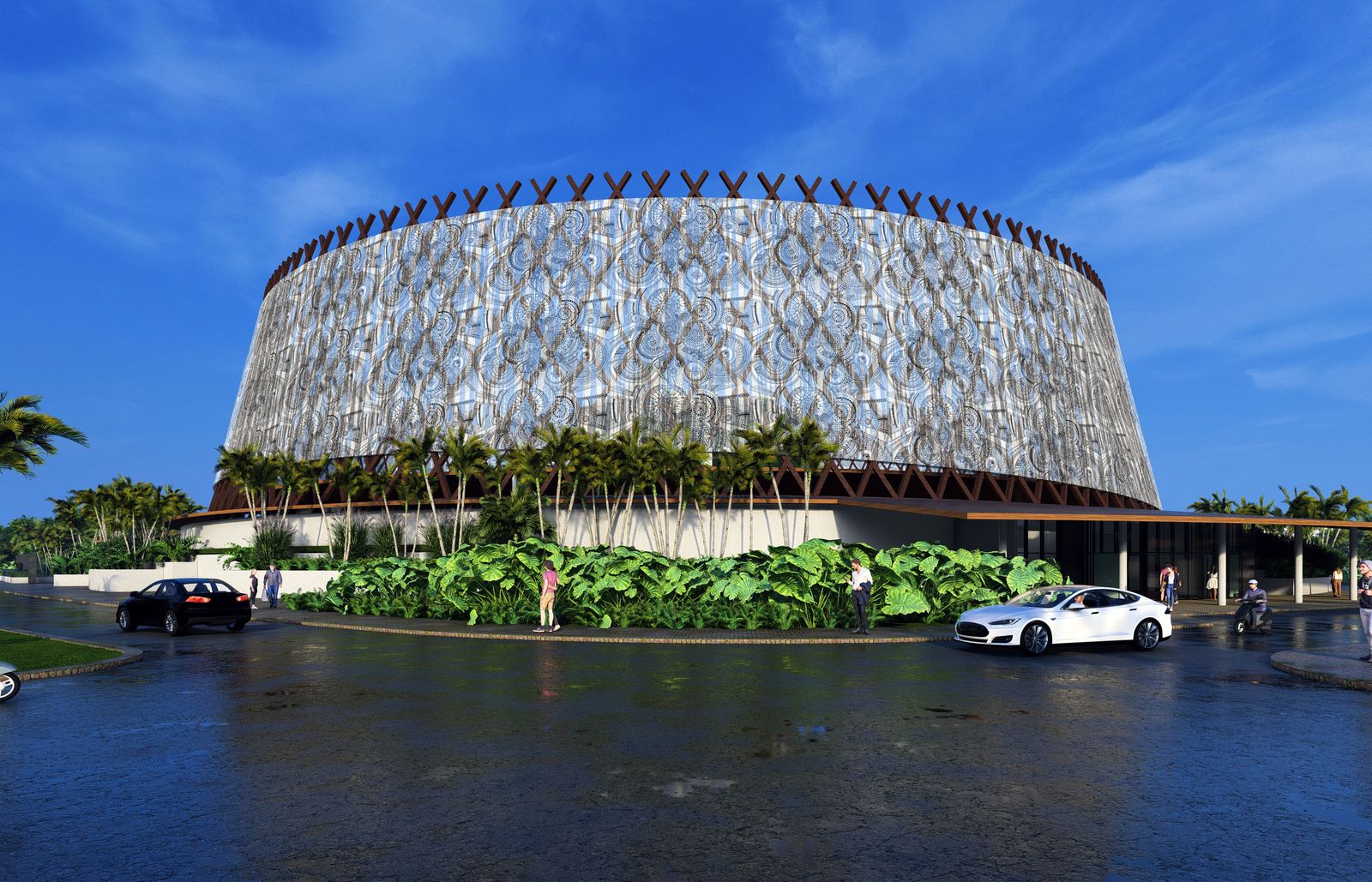
The lattice façade reads as a woven basket set among planted forecourts.

Kura Kura Bali · Indonesia
A world-leading public aquarium and marine research centre for the Indonesian Archipelago, and the first in the world to place visitors beneath a living, tidally fed seawater lagoon.
A global first in marine innovation and sustainability
Beneath the actual sea
Since the acrylic underwater tunnel was invented in the early 1980s, more than 1.5 billion people have walked through one, always on the floor of a concrete tank inside a building. The Bali Aquarium places its 180-metre tunnel beneath a near-natural seawater lagoon, open to the sky.
A passive intake fed by tidal forces and deep ocean currents, with the lagoon’s natural thermosiphon effect and gravity-fed circulation, replaces much of the mechanical pumping a conventional aquarium depends on.
Aquariums of comparable size typically run more than 400 pumps around the clock. Harnessing the ocean itself is designed to cut energy consumption and operating cost while giving guests a more authentic experience of being underwater.
Visitors can explore beneath the sea and, in supervised programmes, enter the lagoon itself: an experience no conventional aquarium can offer.

It is all in the location
Kura Kura Bali, Turtle Island, was designated a Special Economic Zone in April 2023 for high-quality tourism, creative industries and healthcare, offering tax holidays and benefits for qualified investors. The island combines 700,000 trees, more than 160 bird species and 30 hectares of mangroves and parkland with connectivity no other Bali site can match.

Current developments on the island
International school opened July 2025, offering Cambridge Primary, IGCSE/GCSE and the International Baccalaureate.
Luxury outlet developed in partnership with Mitsubishi Estate, slated to open in Q1 2026.
Luxury villas launching from Q2 2026, designed around residents and the environment.
A premier social and leisure destination and gateway to the 17,000-plus islands of the archipelago.
Sustainability-led operators offering exceptional experiences that respect local culture and environment.
Healthcare and wellness focused on world-class standards for Indonesia and beyond.
Investment spotlight
With a population of 277 million, Indonesia is the world’s fourth most populous nation. Bali itself is home to 4.4 million people and recorded GDP growth of 4.9% as of Q3 2023. This economic dynamism, coupled with Bali’s cultural and natural allure, underpins a compelling long-term tourism market. A centrally based, year-round indoor attraction fills a gap in the island’s visitor offer and benefits the regional education sector alongside tourism.

Concept design
The building wraps a circular lagoon with a perforated lattice façade that shades promenades, planted terraces and a panorama room. Visitors move from highland forests at ground level down to the reef and open sea beneath the water line.

Areas and volumes

Design walkthrough
The lattice façade reads as a woven basket set among planted forecourts.
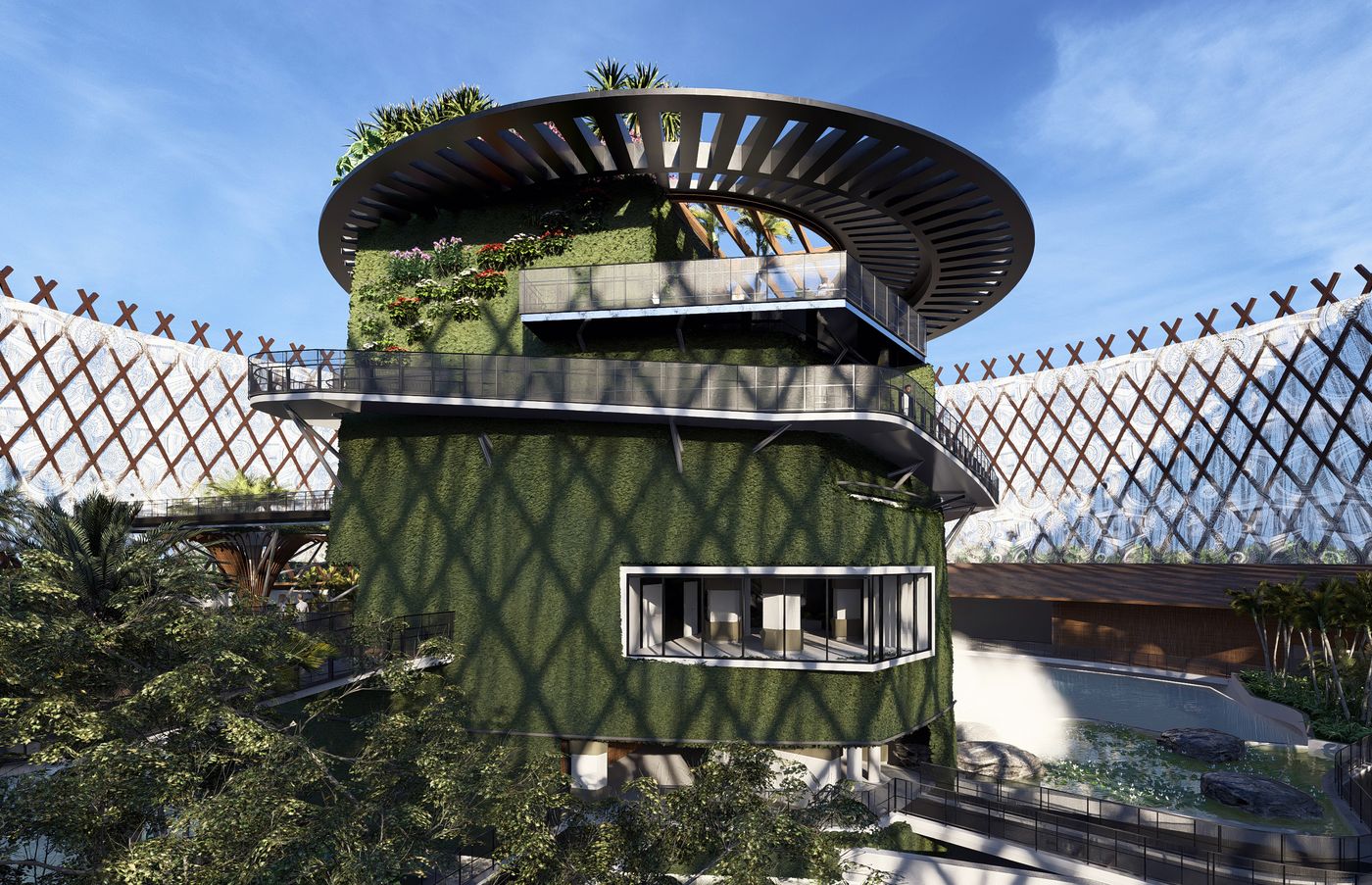
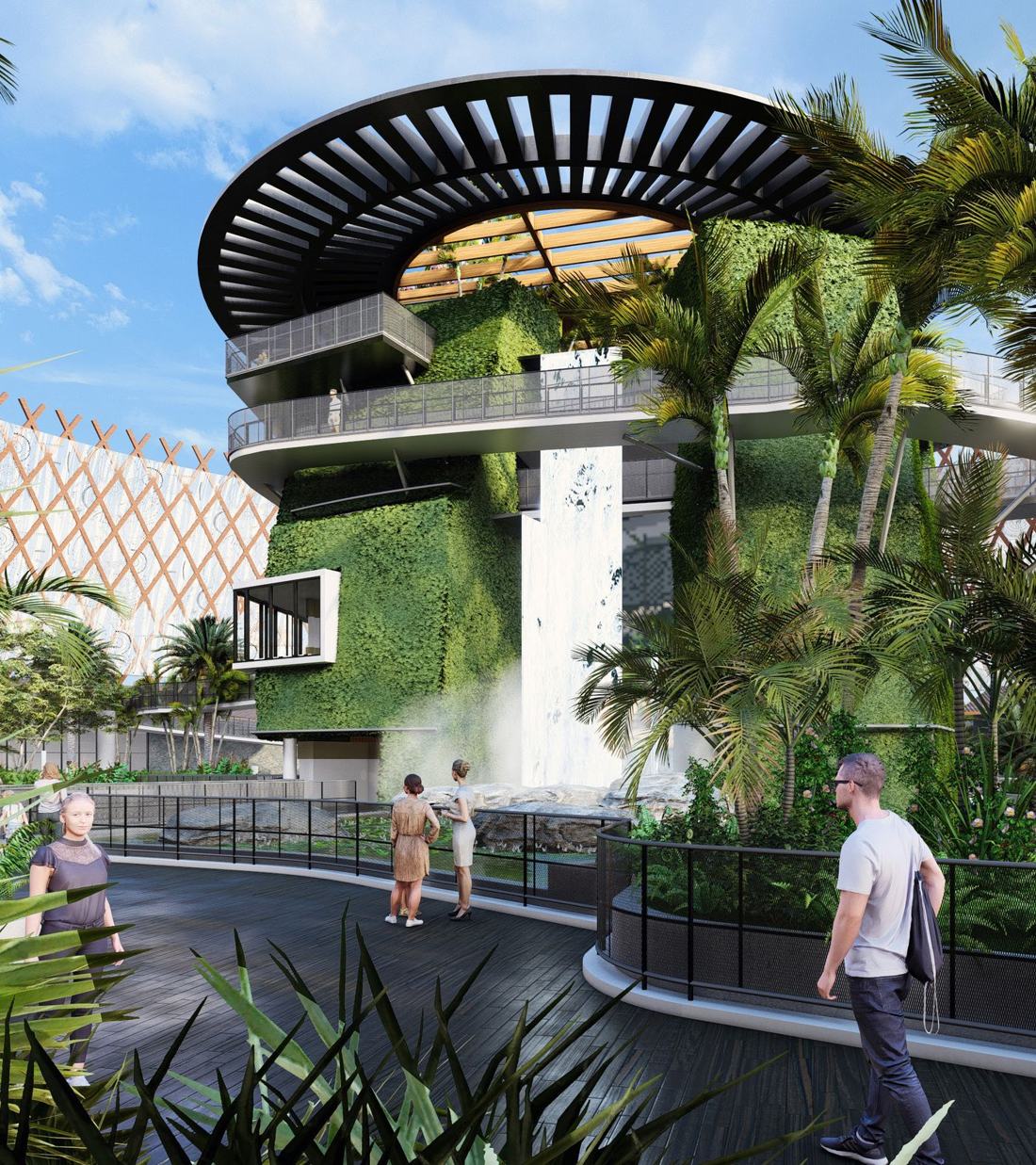
Living walls and shaded terraces open onto the lagoon.
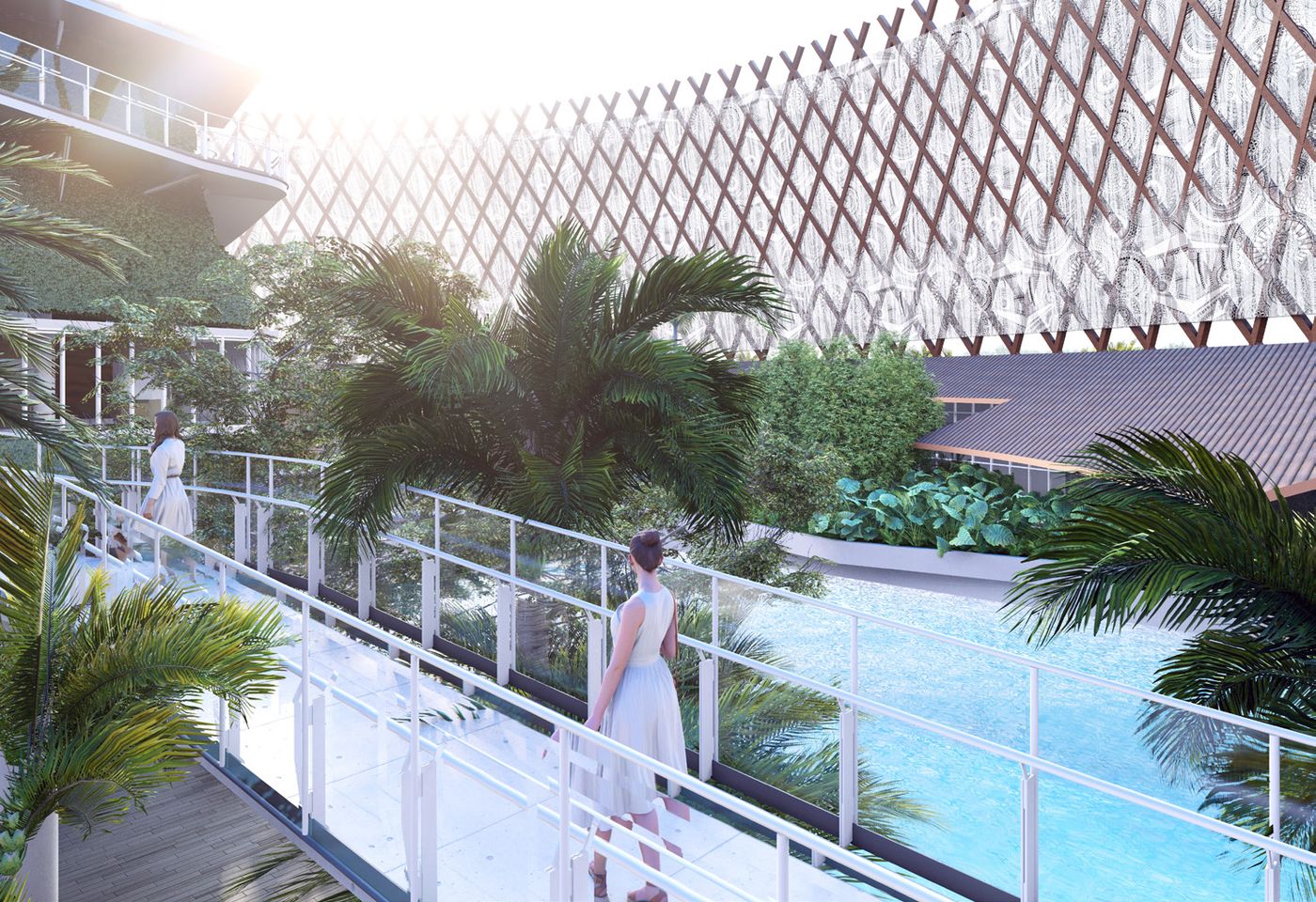
Bridges cross the open water to viewing islands.
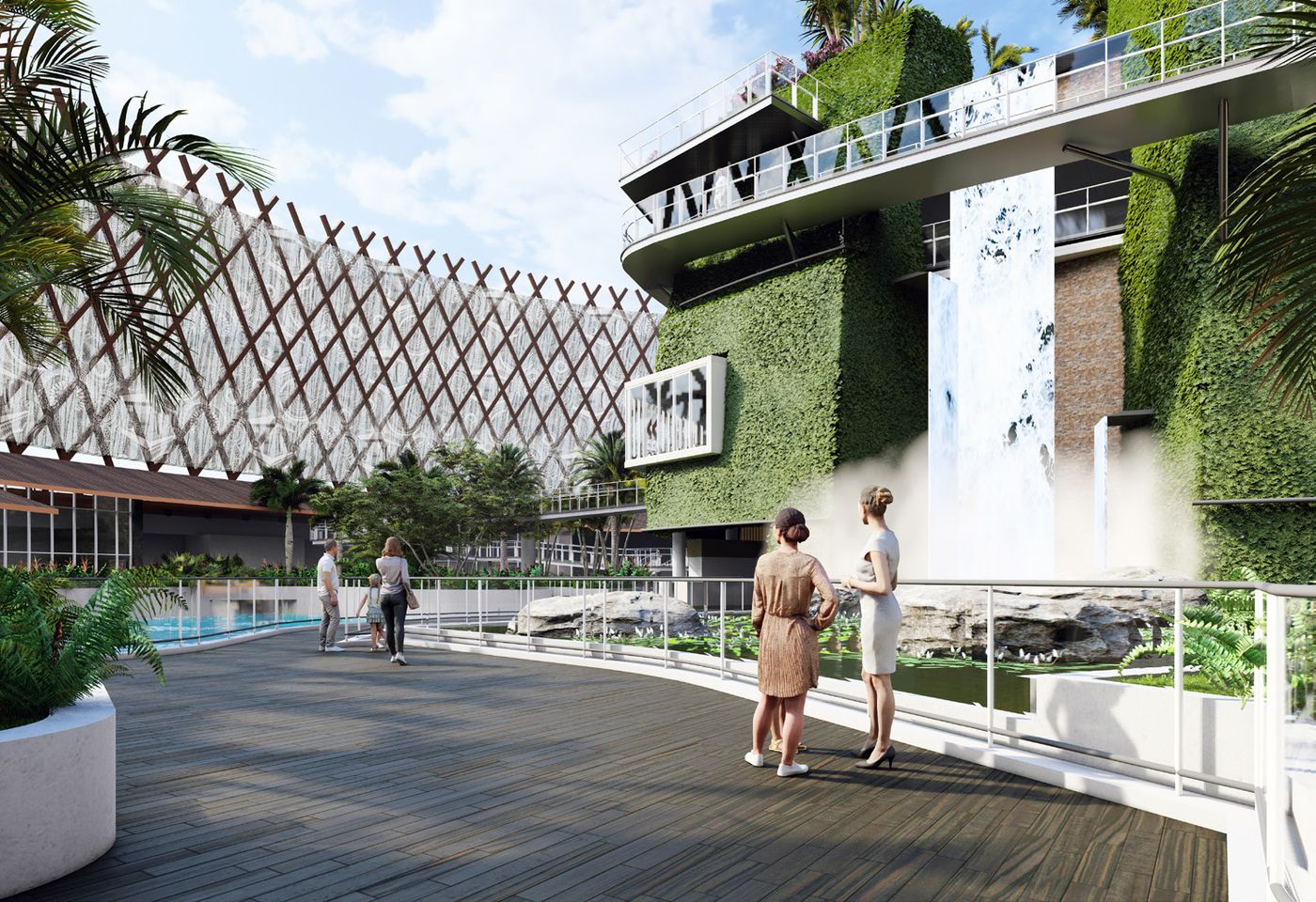
A shaded circuit around the water, with the Panorama Room beyond.
Above-water views of the same habitats seen from the tunnel below.
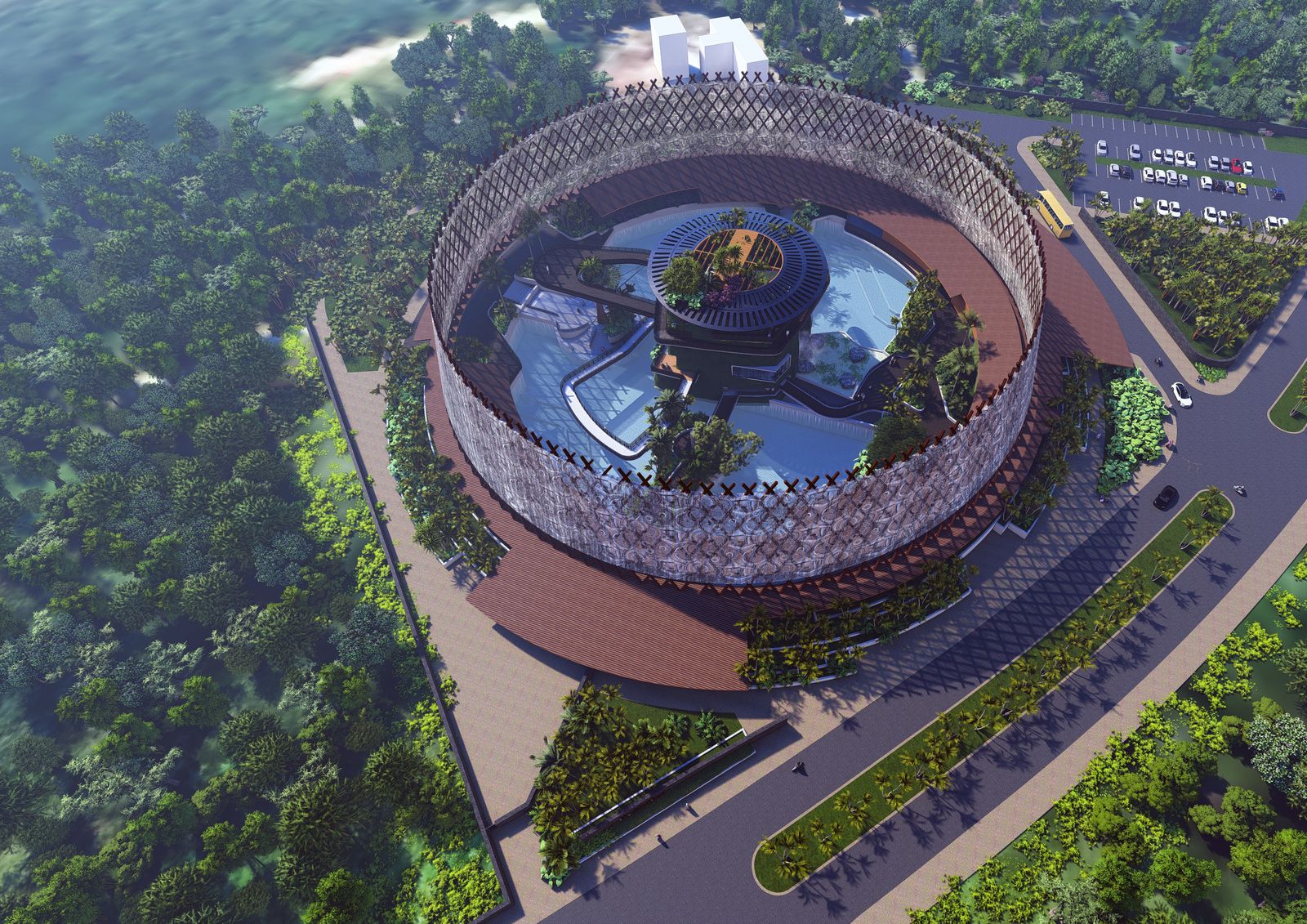
Sited within Kura Kura’s tree canopy, beside the Mangrove Preservation Centre.
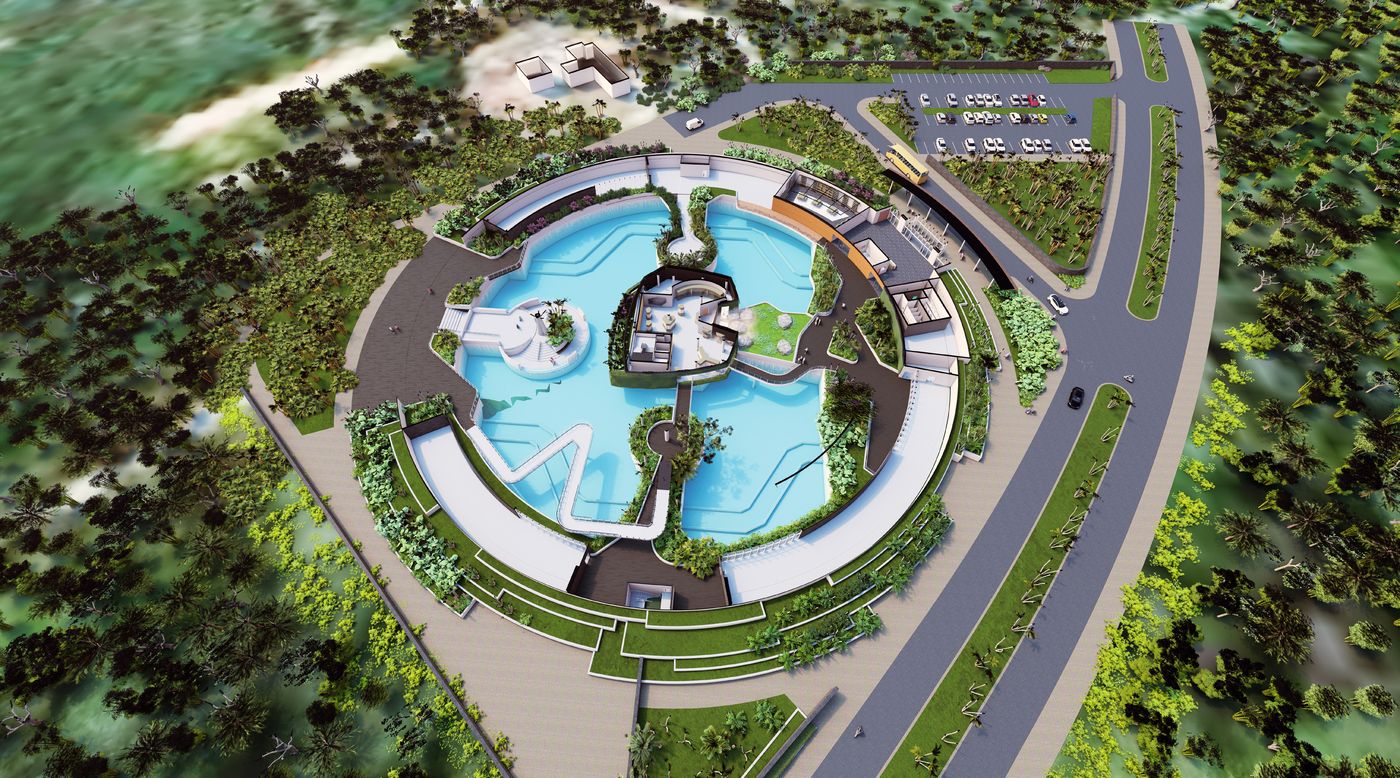
Ground-level parking, coach drop-off and service access.
Exhibit guide
The visitor journey follows water from Bali’s cloud forests to the Coral Triangle. Every habitat pairs living species with cultural narrative, conservation context and interactive storytelling.


“Where Earth Breathes and Spirits Dwell”
Mist-wrapped highlands where moss carpets the rocks and native frogs call from unseen pools. Echoes of Agung frames Bali’s tallest volcano as both geographic giant and spiritual protector; Guardian Shrines of the Highlands links animal symbolism to temple tradition.
“Whispers of the Forest”
Denser, warmer and more vibrant: Tokay geckos and forest cobras, an immersive butterfly dome, and Cobra’s Hollow, which plunges visitors into a predator’s perspective. The Forest Speaks and Vanishing Roots trace stories of deforestation and restoration.
“From Mountain Mist to Sacred Sea”
The journey follows freshwater from upland springs through rice terraces and Subak irrigation to the delta, where mudskippers and archerfish meet the tide. Myths of Water and Build Your Watershed connect hydrology with narrative memory.
“Black Sands and Hidden Shores”
Mangrove nurseries, seagrass meadows and a vast lagoon ecosystem of batfish, juvenile blacktip reef sharks and rays. The zone houses the sea turtle rehabilitation area, where guests follow rescued animals from care to release.
“Gardens of Light, Temples of Life”
Into the Coral Triangle, where more marine species gather than anywhere on Earth. Sunlit coral gardens give way to a bioluminescent reef slope and a monumental living reef. Colors of Survival, Build a Reef and the Time-Lapse Reef dome turn conservation into participation.
“Sacred Wrecks & Open Sea”
Lords of the Open Blue puts grey reef, silvertip and blacktip sharks, dogtooth tuna and giant trevally in a 180-degree current around the tunnel. Kreisel jellyfish tanks, Baitball Ballet and a coral-encrusted shipwreck reclaimed by life complete the journey.

Sustainability is the foundation
By integrating tidal power, lagoon excavation, natural cooling and modular exhibit infrastructure, the Bali Aquarium sets a new benchmark for what a Clean Green Eco Aquarium can achieve, and carries that commitment into ethics, education and community.
Every species is selected under CITES guidelines, Indonesian national regulations and best-practice welfare protocols. Wherever possible animals come from accredited breeders or rescue programmes; nothing is wild-caught without purpose.
An on-site marine animal rehabilitation programme, most notably for juvenile green sea turtles, prepares rescued animals for return to the wild with local conservation groups.
A marine research hub, education and lecture facilities, and partnerships with local schools and universities link the aquarium with Kura Kura’s educational campus and the Mangrove Preservation Centre under construction nearby.
Construction, operations and exhibit design are led by Aquamarine Projects in close partnership with Indonesian architects, scientists and educators, grounding the project in national expertise and local benefit.
“In a time of rising seas, warming oceans and rapid biodiversity loss, the Bali Aquarium is a hopeful vision: a place where people come not just to see marine life, but to understand it, protect it and celebrate it.”
The opportunity
The Bali Aquarium is being advanced as a developer-to-operator project: a dedicated Indonesian project company takes the facility through design, construction, fit-out and commissioning, then transitions into long-term operation. Aquamarine Projects originates the concept and leads design, specialist delivery and operations.
The only aquarium to place an acrylic tunnel beneath a functioning seawater lagoon, with the low-energy model and visitor story that follows from it.
A centrally located indoor attraction that complements Bali’s beach, temple and resort offer and serves residents, schools and visitors alike.
Positioned inside Kura Kura Bali’s Special Economic Zone, alongside an international school, luxury retail, marina, resorts and a wellness hub.
A research, rehabilitation and education mandate that aligns with institutional, government and conservation-minded capital.
Site selection, market study, design brief and sketch design integrating architecture, life-support technology and exhibitry.
An Indonesian project vehicle on Kura Kura Bali, with lease and SEZ arrangements structured with local advisers.
Detailed architectural, marine-engineering and life-support design with Indonesian architects, scientists and consultants.
Seawater intake, environmental assessment and mangrove-sensitive pipeline routing addressed through the formal approvals path.
Specialist aquarium delivery, acrylic, filtration and animal acquisition coordinated to opening.
Aquamarine-led operations, curatorial, education and commercial management for the project company.
Feasibility study, design documentation, financial model and proposed investment structure are available to qualified investors and partners under confidentiality. Nothing on this page constitutes an offer of securities or investment advice.
Strategic and institutional investors, family offices, development partners, tourism operators and conservation and research institutions with an interest in Bali and the wider Indonesian market.

Investor enquiries
Aquamarine Projects welcomes discussions with investors, development partners and institutions. Send an enquiry and we will respond with next steps and a confidentiality agreement.